The SMS-First Future
Apps Are Over. The Text Message Won.
Your phone has 80 apps installed. You use six of them. The rest sit there collecting storage and sending you notifications you ignore.
Every app follows the same pattern: a login screen, a terms-of-service checkbox, a notification permission popup, a 200MB download. All for something that should have been a text message.
The text message is already on every phone ever made. No download. No update. No tracking. No crashes.
The Thesis
Every transaction a small business runs (booking, confirming, invoicing, paying) fits inside an SMS thread.
No app to build. No app for your customer to download. No onboarding funnel. No churn. One phone number.
We over-built the interface layer for twenty years. AI is now smart enough to collapse all of that back to plain language over the simplest protocol we have.
Why SMS Wins
1. Universal by Default
SMS works on every phone. The flip phone in your grandmother's drawer. The $30 prepaid from the gas station. The latest iPhone. No other platform on Earth has this reach.
2. Zero Friction
No sign-up. No download. No "create an account." You text a number. You're in. Your phone number is the authentication. You proved who you are by holding the device.
3. Gen Z Already Lives Here
Gen Z doesn't check email. They barely open apps. They read every text within three minutes. SMS open rates hit 98%. Email sits at 20%. Push notifications get disabled on day one. SMS is the last channel with guaranteed attention.
4. Small Businesses Don't Have Apps
33 million small businesses in America. Fewer than 1% have a custom app. 100% of them have a phone number. The barber, the nail salon, the HVAC company, the mobile dog groomer, the freelance photographer. They all run their business from their phone.
How It Works
Phone Number as Identity
Forget email/password. Forget OAuth. Forget "Sign in with Google."
Your phone number is your identity. Your carrier verified it. Every business already has it in their contact list. You texted from this number, so you are this person. No passwords to forget. No accounts to create.
For businesses, your customer list becomes your contact list. Every person who texted you is already in the system.
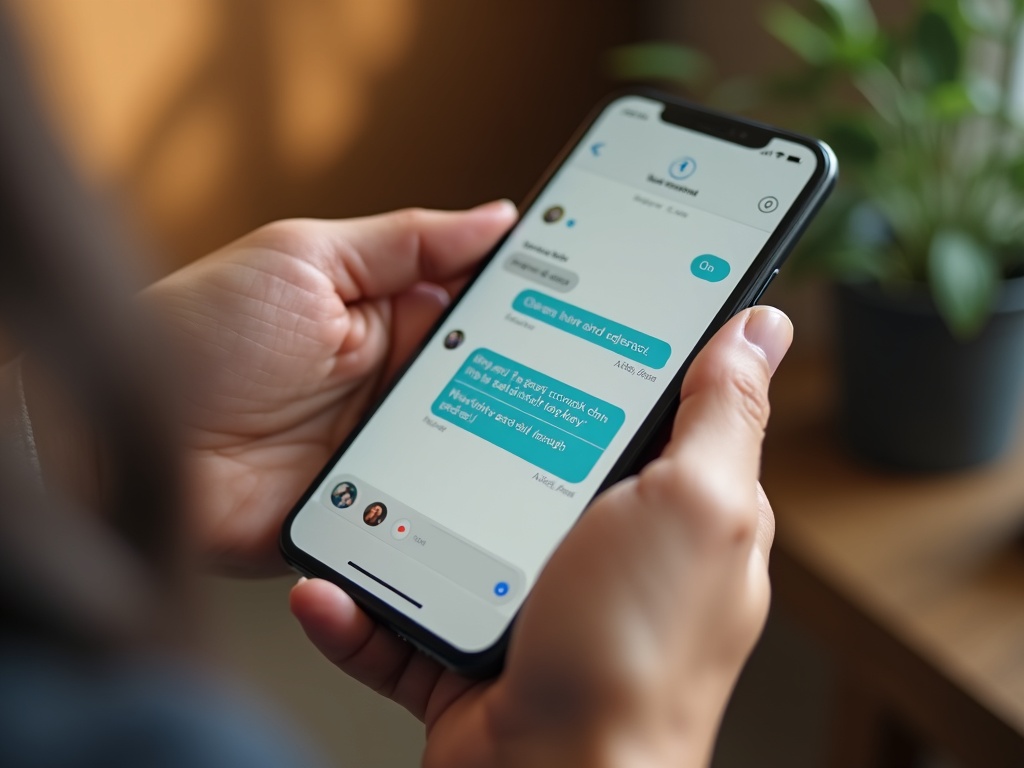
Conversational Booking
A customer texts a business:
Customer: Hey, do you have any openings Thursday afternoon?
Business:  Sure! I have 2:00 PM and 3:30 PM open on Thursday.
           Reply 1 for 2:00 PM or 2 for 3:30 PM.
Customer: 1
Business:  You're booked for Thursday at 2:00 PM.
           I'll send you a reminder the day before.
Behind the scenes, an AI voice/SMS agent handles the conversation. It checks real-time availability across Square Appointments, Google Calendar, Calendly, or all three at once. It applies booking rules, respects provider schedules, avoids conflicts, and confirms the slot. The customer sent two texts.
SMS Invoicing
After the appointment:
Business:  Thanks for coming in! Here's your invoice:
           https://pay.vix.auto/inv/a3xK9
           Total: $35.00
           Tap to pay with Apple Pay, card, or bank.
Customer:  [taps link, pays in 2 seconds]
Business:  Payment received. See you next time!
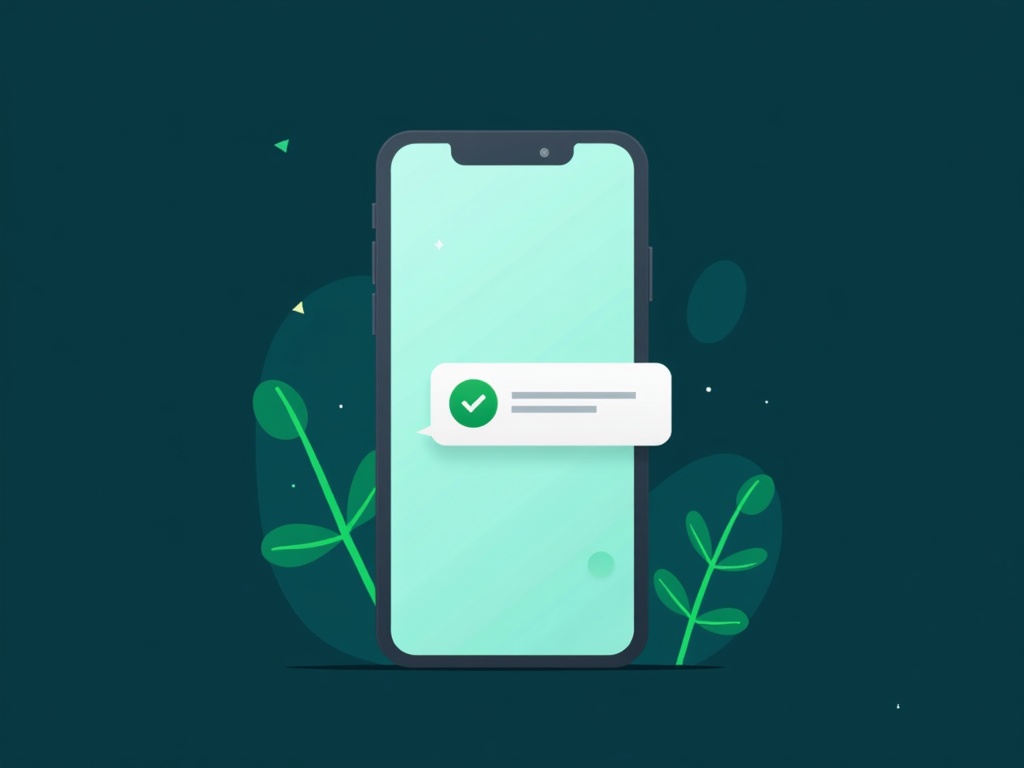
The invoice is a link. The link opens a mobile-optimized payment page. No app, no login. Apple Pay and Google Pay take one tap. The payment settles, the business gets notified by SMS, and the books update. Two text messages and one tap.
Automated Reminders and Follow-Up
Business:  Reminder: You have a haircut tomorrow at 2:00 PM.
           Reply C to confirm, R to reschedule, or X to cancel.
Customer:  C
Business:  See you tomorrow!
No-shows cost small businesses an estimated $150 billion per year in the US. A single automated SMS reminder recovers 25-30% of appointments that would otherwise be lost.
What We're Replacing
| Today (App World) | Tomorrow (SMS World) |
|---|---|
| Download the app | Text the number |
| Create an account | You already have one (your phone number) |
| Navigate to "Book Appointment" | "Do you have any openings Thursday?" |
| Pick date, pick time, pick service | "1" |
| Get a push notification (if enabled) | Get a text (always delivered) |
| Open app, find invoice, enter card | Tap a link, Apple Pay, done |
| Forget password, reset, re-login | You're always logged in |
The Market
33.2 million small businesses in the US. 70% of them are service-based. Appointments keep them alive.
62% of Gen Z consumers prefer texting a business over calling. 78% of consumers wish they could text a business to book. The average small business owner checks their phone 96 times per day but opens their booking app twice.
The first customers for this: appointment-based small businesses losing money to no-shows, double-bookings, and app fatigue. The nail salon with three booking apps they barely use. The barber who takes bookings over personal text and loses half of them. The HVAC company whose dispatcher uses a whiteboard.
The Principles
If a product requires a download, it already lost. The best interface is the one already installed.
Phone number is identity. Stop making people prove who they are. They texted you. Done.
AI handles the conversation. Humans handle the work. The business owner should be cutting hair, not managing a booking app.
Every business transaction should fit in a text thread. Book, confirm, remind, complete, invoice, pay, review. All inside Messages.
Meet your customer where they are. They're in their text messages. They've always been there.
Simplicity is the feature. Every field you remove, every tap you eliminate, every screen you delete. The product gets better.
The Future
We built millions of interfaces for interactions that are conversational by nature. You don't need a UI to say "Book me in for Thursday." You don't need a dashboard to say "Send me the invoice." You don't need an app to tap a payment link.
You need a phone number smart enough to understand you, a scheduling engine that knows what's open, and a payment link that takes one tap.
We're building that.
The entire small business stack (booking, communication, invoicing, payment) inside the most universal interface ever built: the text message.
No apps. No accounts. No friction. Text.